Tuesday, November 1, 2011

True Crime on the Kindle: A Shocking True Story of Shame, Desire and Snobbery

I love trashy true crime novels. The kind of books for sale in the grocery store with titles like Death on the Highway: The Shocking True Story of Secrets, Murder, and Twisted Love or Lone Star Murder: The Shocking True Story of Love, Death, and Dark Secrets. You get the idea. These books usually have crime scene photos on the cover under raised glossy letters. In the middle of each book is a quarter-inch thick section of crime scene photos too shocking to put on the cover, plus, inevitably, the high school yearbook photo of the future killer, future victim, or both.

The master of the genre is Ann Rule. Her books almost always follow the same outline: Naive victim falls in love with someone who seems great on the surface, but inside is a seething mass of psychopathic tendencies. By the time the naive victim realizes what's going on, it's too late. The victim gets murdered in some horrific way, and even though everyone knows the killer was the psychopathic boyfriend or girlfriend, the police have to spend years building up a solid case. In the end, the killer goes to prison, where Ann Rule shows up to interview him or her. Voila! A bestseller is written.

I love these books without reservation. The more gruesome the murder, the more perverse the killer's tendencies, the stranger the evidence trail, the better. There's no shortage of these kinds of books; it's one of the most popular nonfiction genres in the US. But there's a problem: I feel bad reading them. I feel like everyone who sees me with my nose buried in Date Night Murder: A Grisly Tale of Secrets and Death knows that I'm just reading it for the titillating details. And they're right, I am. But I don't want to be judged for my reading choices! Sure, I'm reading trash now, I want to insist, but I majored in literature! I've read War and Peace, and I'm prepared to discuss it intelligently! I have a subscription to The New Yorker! I bought a copy of Jeffrey Eugenides' new book in hardcover! I'm so insecure about being judged that last time I rode on a plane I hid my trashy true crime novel inside a copy of Sky Mall.

Recently, though, I've found a solution. I didn't stop reading true crime, but I did stop feeling ashamed about it. Did I realize I'm a worthwhile person and I don't need to prove anything? Nope, I just found a way to hide my shameful habit. I've been checking out e-books from the Library's Overdrive service and reading them on my Kindle. On a Kindle, no one can tell what I'm reading. No one needs to know that I'm currently halfway through Die, Lover, Die: A True Story of Dark Secrets and Death. To the outside observer, I might as well be reading Little Women. Free from the prying eyes of the judgmental public, I've been able to read more true crime than ever! Right now Overdrive has about 20 true crime titles available for Kindle, and they're adding more all the time. Finally I can read all the shocking murder details I want without feeling like the world is looking down on me.

One of the things the move to digital books will change is the communal nature of reading in public. Reading is a solitary activity, but by reading in public you're broadcasting your choices and in some ways contributing to the conversation, even if you're not talking to anyone. I can glance at a book title and instantly feel like I know a little bit about the person reading it. This person likes mysteries, this person likes cooking, this person wants to know more about Steve Jobs. We lose some of that when we move to digital books. I might tell a stranger "I read that book, too," if I can see the cover. We might talk about it. We might become friends. But I've never asked a stranger what they're reading on their Kindle or Nook. If I can't see the cover, it seems like prying. Maybe by moving to digital formats we lose a little of our sense of community.

But at least no one is judging me for reading Murder at Midnight: The Shocking True Story of a Suburban Family's Descent into Lies, Dark Secrets, and Death.

You can find True Crime e-books on Overdrive here.

Note: None of the True Crime novels mentioned actually exist.

By Grace, Youth Services Manager at the Library Station.

Tuesday, October 18, 2011

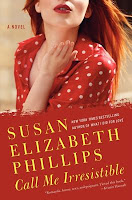
"Call Me Irresistible" by Susan Elizabeth Phillips


At the beginning of Call Me Irresistible, Ted Beaudine is about to be marry Lucy Korvik. Meg is one of the attendants and Lucy’s best friend, but she doesn’t believe that Lucy and Ted are meant for each other. After the wedding is called off, the shocked small town of Wynette blames Meg for the broken relationship. Throughout Call Me Irresistible, the ostracized Meg is not at the best point in her life. She is just about broke, and her credit card is maxed out. Plus, even her parents and siblings have cut her off so that she will stop living an aimless life and find responsibility and a purpose.

To be responsible, Meg must first find a job. This isn’t easy, considering no one wants to hire the girl who broke up Ted and Lucy. Eventually, she finds a couple jobs, and her fashion sense inspires her to sell jewelry on the side. Slowly Meg begins taking responsibility for herself, and the town no longer wishes to collectively ostracize her. Meg starts to like the town residents in return, including her best friend’s former fiance. As those two spend more time together, she unexpectedly falls for the irresistible Ted.

Susan Elizabeth Phillips is romance author that always makes you laugh, and Call Me Irresistible will not let you down. This book made me laugh, smile, and I even wanted to cry at some points when the town was ganging up on Meg. I could not put this book down once I started it, and this is the case for most of her books. Frequent readers of Susan Elizabeth Phillips will appreciate how she incorporates stories and characters from her other books so it’s possible to find out what is going on with your favorite characters.

Click on the cover or here to reserve a copy of the book.

Book review by Becky.

Wednesday, October 5, 2011

May We Suggest...Stephen King


Stephen Edwin King was born in Portland, Maine in 1947, the second son of Donald and Nellie Ruth Pillsbury King. When Stephen was eleven, his mother brought her children to Durham, Maine, for good. Stephen attended the grammar school in Durham and then Lisbon Falls High School, graduating in 1966. From his sophomore year at the University of Maine, he wrote a weekly column for the school newspaper, THE MAINE CAMPUS. He was also active in student politics, serving as a member of the Student Senate. He came to support the anti-war movement on campus, arriving at his stance from a conservative view that the war in Vietnam was unconstitutional. He graduated from the University of Maine in 1970, with a B.A. in English and qualified to teach on the high school level.

He and Tabitha Spruce married in January of 1971. As Stephen was unable to find placement as a teacher immediately, the Kings lived on his earnings as a laborer at an industrial laundry. Stephen made his first professional short story sale ("The Glass Floor") to Startling Mystery Stories in 1967. Throughout the early years of his marriage, he continued to sell stories to men's magazines. Many of these were later gathered into the Night Shift collection or appeared in other anthologies. In the fall of 1971, Stephen began teaching high school English classes at Hampden Academy. Writing in the evenings and on the weekends, he continued to produce short stories and to work on novels.

In the spring of 1973, Doubleday & Co. accepted the novel Carrie for publication. At the end of the summer of 1973, the Kings moved their growing family to southern Maine. There, Stephen wrote his next-published novel, originally titled Second Coming and then Jerusalem's Lot, before it became Salem's Lot, in a small room in the garage. Carrie was published in the spring of 1974. That same fall, the Kings left Maine for Boulder, Colorado. They lived there for a little less than a year, during which Stephen wrote The Shining, set in Colorado. Returning to Maine in the summer of 1975, Stephen finished writing The Stand, much of which also is set in Boulder. The Dead Zone was also written. To date, King has written over 48 novels and various other fiction and nonfiction works.

Currently, Stephen and Tabitha now spend winters in Florida and the remainder of the year at their Bangor and Center Lovell homes. The Kings have three children: Naomi Rachel, Joe Hill and Owen Phillip, and four grandchildren. Stephen and Tabitha provide scholarships for local high school students and contribute to many other local and national charities. Stephen is the 2003 recipient of The National Book Foundation Medal for Distinguished Contribution to American Letters.

Stephen King's Published Books and Stories

  • 1960 - People, Places, And Things - Volume 1 (limited edition with Chris Chelsey)

  • 1964 - The Star Invaders (limited edition)

  • 1974 - Carrie

  • 1975 - Salem's Lot

  • 1977 - The Shining

  • 1978 - Night Shift (stories)

  • 1978 - The Stand

  • 1979 - The Dead Zone

  • 1980 - Firestarter

  • 1981 - Cujo

  • 1981 - Danse Macabre (nonfiction about horror)

  • 1981 - Roadwork

  • 1982 - Creepshow (comic book, illustrated by Bernie Wrightson)

  • 1982 - The Dark Tower I: The Gunslinger

  • 1982 - Different Seasons (novellas)

  • 1983 - Christine

  • 1983 - Pet Sematary

  • 1983 - Cycle of the Werewolf

  • 1984 - The Talisman (written with Peter Straub)

  • 1985 - Skeleton Crew (stories)

  • 1985 - The Bachman Books (novel collection)

  • 1986 - It

  • 1987 - The Eyes of the Dragon

  • 1987 - Misery

  • 1987 - The Dark Tower II: The Drawing of the Three

  • 1988 - The Tommyknockers

  • 1988 - Nightmares in the Sky (Photo book with text by King)

  • 1988 - Dark Visions

  • 1989 - The Dark Half

  • 1989 - Dolan's Cadillac (limited edition)

  • 1989 - My Pretty Pony (limited edition)

  • 1990 - The Stand: The Complete & Uncut Edition

  • 1990 - Four Past Midnight (stories)

  • 1991 - Needful Things

  • 1991 - The Dark Tower III: The Waste Lands

  • 1992 - Gerald's Game

  • 1993 - Dolores Claiborne

  • 1993 - Nightmares & Dreamscapes (stories)

  • 1994 - Insomnia

  • 1995 - Rose Madder

  • 1995 - Umney's Last Case

  • 1996 - The Green Mile (originally published as a monthly serial consisting of six parts:The Two Dead Girls, The Mouse on the Mile, Coffey's Hands, The Bad Death of Eduard Delacroix, Night Journey, and Coffey on the Mile)

  • 1996 - Desperation

  • 1997 - Six Stories (stories)

  • 1997 - The Dark Tower IV: Wizard and Glass

  • 1998 - Bag of Bones

  • 1999 - Storm of the Century

  • 1999 - The Girl Who Loved Tom Gordon

  • 1999 - The New Lieutenant's Rap (limited edition)

  • 1999 - Hearts in Atlantis

  • 1999 - Blood and Smoke (audio book)

  • 2000 - Riding the Bullet (electronically published novella)

  • 2000 - The Plant(electronically published)

  • 2000 - Secret Windows

  • 2000 - On Writing: A Memoir of the Craft(nonfiction autobiography)

  • 2000 - Dreamcatcher

  • 2001 - Black House (written with Peter Straub)

  • 2002 - From a Buick 8

  • 2002 - Everything's Eventual: 14 Dark Tales

  • 2003 - The Dark Tower I: The Gunslinger (revised edition)

  • 2003 - The Dark Tower V: Wolves of the Calla

  • 2004 - The Dark Tower VI: Song of Susannah

  • 2004 - The Dark Tower VII: The Dark Tower

  • 2004 - Faithful: Two Diehard Boston Red Sox Fans Chronicle the Historic 2004 Season

  • 2005 - The Colorado Kid

  • 2006 - The Secretary of Dreams

  • 2006 - Cell

  • 2006 - Lisey's Story

  • 2008 - Duma Key

  • 2008 - Just After Sunset

  • 2009 - Stephen King Goes to the Movies

  • 2009 - The Little Sisters of Eluria (limited edition)

  • 2009 - "Graduation Afternoon" (in PostScripts)

  • 2009 - "Throttle" (in He is Legend)

  • 2009 - UR (e-novella available only on Amazon.com's Kindle)

  • 2009 - Under the Dome

  • 2009 - "A Good Marriage"

  • 2009 - "Big Driver"

  • 2009 - "1922"

  • 2009 - "Fair Extension"

  • 2010 - Blockade Billy

  • 2010 - Full Dark, No Stars

  • 2011 - 11/22/63


Tuesday, October 4, 2011

"Wonderstruck" by Brian Selznick


Just like in The Invention of Hugo Cabret, Brian Selznick’s latest creation, Wonderstruck, presents a protagonist on a journey of self-discovery after the loss of a parent. For children’s literature, this is heavy stuff. However, Selznick injects his stories with imagination and fantastic storytelling, causing the reader to focus less on the dire situations and more on the brilliant world he creates.

Wonderstruck is a hybrid type of literature. While the book is over 600 pages long, at least half the pages are just hand drawn pictures, and some of the pages that are only text are just a mere paragraph. The pictures in the book give the reader a visual to the world that Selznick has created. The writing style is straight-forward and easy to grasp. While not a graphic novel technically, Wonderstruck is not just a novel either.

In Wonderstruck, Selznick tells two stories. One story is told entirely through just pictures and the other through words. In one story, the main character deals with the loss of a parent while the other deals with rejection by a parent. These two stories intertwine together, giving the reader a satisfying conclusion when the two stories finally merge at the end.

Wonderstruck is great for how accessible it is. Every few pages, the reader is rewarded with detailed pictures that push the story along. Indeed, Selznick’s works are universally readable to anyone including children and adults. All that is required is imagination and appreciation for great storytelling.

Click on the cover or here to reserve a copy of the book.

Book review by Justin.

Tuesday, September 13, 2011

"Delirium" by Lauren Oliver


I didn’t have high hopes for Delirium. The first descriptions of Lena Haloway, the main character, emphasize how absolutely ordinary she is—she’s not pretty, not ugly, not smart, not dumb, not particularly funny… ”Oh no,” I thought, “Not another Bella Swan.”

I’m happy to admit that I was completely and utterly wrong about Lena, and about Delirium as a whole. Where Bella begins as a blank slate and never really develops (Twilight fans, feel free to direct hate mail to graceb@thelibrary.org), Lena’s ordinariness at the beginning of the book serves as a contrast to the dramatic changes she experiences over the course of this powerful teen novel.

In an unspecified dystopian future, love is classified as a curable disease. The world is safer and better now that amor deliria nervosa has been eliminated. Well, almost eliminated. Some people still get infected, and there are rumors that outside the electrified fences, whole populations of uncured Invalids live in the forest. But Lena can’t wait to get the cure when she turns 18 and to finally be safe from the fatal disease with its terrifying symptoms of sweaty palms, delusional thinking, obsession, and finally, death. Until she meets Alex, that is…

I won’t spoil the plot for you here. For me, what elevated the book from the level of an interesting story to a satisfying novel were the carefully imagined details. The descriptions of love as a progressive disease are hilarious, clever, and macabre. Oliver has taken care to imagine the everyday experience of a society where no one dares to utter the word “love.” One of the best moments in the book occurs when a character reads Elizabeth Barret Browning’s famous Sonnet 43 aloud. I’d always thought of it as a cheesy poem, but I almost teared up on seeing those old familiar lines. “How do I love thee? Let me count the ways./ I love thee to the depth and breadth and height/ My soul can reach…/ I love thee to the level of everyday’s/ most quiet need…”

In a YA field saturated with sappy depictions of forbidden love, Delirium stands out. Lauren Oliver has captured the overwhelming feelings of first love by making it as shocking for the reader as it is for the characters. This is a YA novel I’d recommend to even the most jaded adults.

Click on the cover or here to reserve a copy of the book.

Book review by Grace.